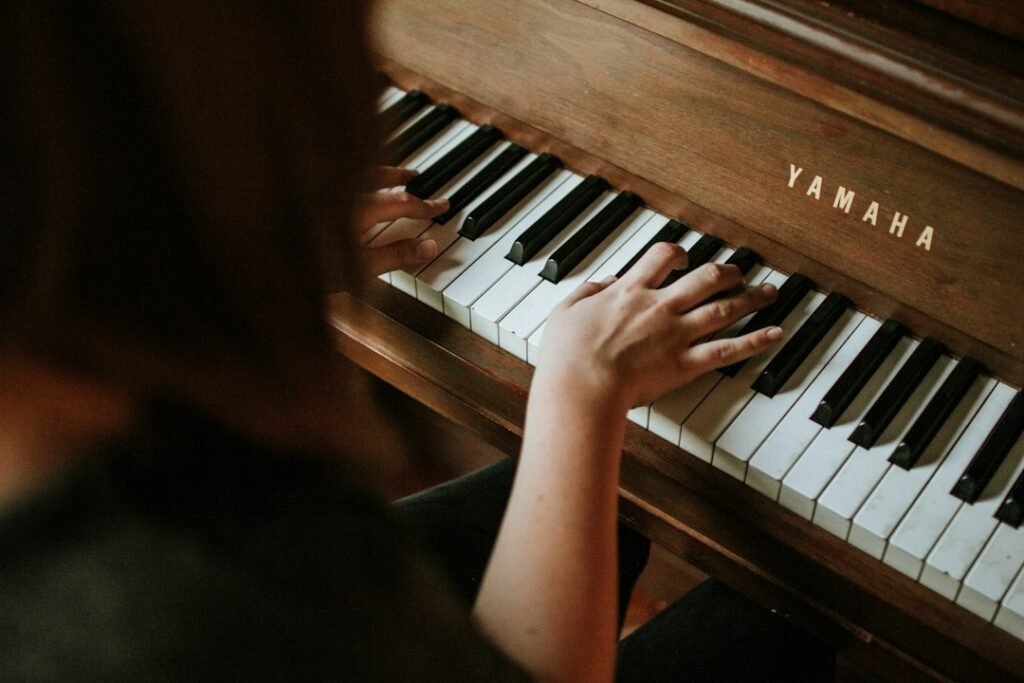
For most adult beginners, the best piano-practice schedule is not the longest one. It is the one you can repeat consistently without rushing, losing focus, or turning practice into a chore.
A good starting target is 15–20 focused minutes a day, especially if you are completely new. If you have more time and still feel mentally fresh, you can extend that to 30 minutes or split your practice into two shorter sessions.
The important idea is simple: regular practice usually matters more than occasional marathon sessions. Roland’s beginner guidance notes that even 15 minutes per day can be more useful for musicality and memory than a long session once a week, while Yamaha recommends setting aside at least 20 minutes daily where possible.
How long should a complete beginner practice?
If you are in your first few weeks, aim for a session short enough that you can still pay attention to your hands, rhythm, and sound.
- 10 minutes: useful on very busy days and much better than skipping practice entirely.
- 15–20 minutes: an excellent starting range for most adult beginners.
- 30 minutes: useful once you can divide the session into clear goals without losing concentration.
- 45–60 minutes: can work later, but beginners rarely need to force this much time at once.
There is no prize for staying at the piano after your practice has stopped being productive.
Why shorter daily practice works so well
Piano learning involves several things at once: recognizing patterns, coordinating fingers, hearing mistakes, remembering movements, and keeping rhythm. Those skills improve through repetition.
Shorter sessions make it easier to repeat the same useful material across several days instead of trying to “catch up” once a week. They also make piano easier to fit into adult life.
If you practice 15 minutes on five days, that gives you five separate chances to revisit a chord change, melody, or rhythm. One 75-minute session gives you the same total time, but far fewer opportunities to return to the material after a break.
A simple 20-minute beginner practice routine
You do not need to divide every practice session with a stopwatch. This structure simply helps you avoid spending the whole session replaying the part you already know.
Minutes 1–3: settle in and warm up
Check your seat position, relax your shoulders, and place your hands comfortably. Play something easy and familiar: a five-note pattern, slow chord changes, or a simple scale fragment.
Minutes 4–8: one small technique goal
Choose one skill. For example:
- changing between two chords without stopping;
- playing a five-note pattern evenly;
- keeping a steady four-beat count;
- using the same fingering each time;
- playing one hand slowly and cleanly.
Do not try to fix everything at once.
Minutes 9–17: work on actual music
Practice a short section of a piece or song you enjoy. If a section is difficult, make it smaller. Two measures practiced carefully are often more useful than playing an entire piece with the same mistakes every time.
Minutes 18–20: finish with a clean attempt
Play the section once at a comfortable speed. Then decide what tomorrow’s first goal will be. That makes it easier to sit down and begin the next session.
If you only have 10 minutes
Use the time deliberately:
- 2 minutes: warm up with something familiar.
- 5 minutes: work on one difficult chord change, rhythm, or short phrase.
- 3 minutes: play a section of music and stop with a clear goal for next time.
A ten-minute session is not a failed version of a longer session. It can be an effective practice day when it is focused.
If you have 30 minutes
Once 20 minutes feels comfortable, you can use the extra time for a second area rather than simply repeating the same exercise longer.
- 5 minutes: warm-up and keyboard familiarity.
- 7 minutes: technique, chords, rhythm, or note reading.
- 13 minutes: a piece or song.
- 5 minutes: review, play-through, or listening back to a recording.
If concentration drops after 20 minutes, split the session. Fifteen minutes in the morning and fifteen later in the day is perfectly reasonable.
Practice goals are better than simply watching the clock
Time gives your practice a boundary, but a specific goal gives it direction.
Compare these two plans:
“I will practice for 20 minutes.”
versus:
“I will practice the left-hand chord change slowly until I can play it five times without stopping, then I will work on the first four measures of the melody.”
The second plan tells you what success looks like.
Roland similarly recommends goal-based practice and breaking difficult material into smaller parts instead of simply repeating a whole piece.
How many days per week should you practice?
If possible, practice on most days of the week. You do not need a perfect seven-day streak.
For many adults, five short sessions per week is a realistic starting pattern. If life interrupts the schedule, restart the next day instead of trying to “repay” missed practice with an exhausting session.
Should beginners practice scales every day?
Scales can be useful, but beginners do not need to spend most of their limited practice time on them.
Early practice can include short scale fragments or five-note patterns to develop coordination, but you should also spend time on chords, rhythm, note recognition, and music you actually want to play.
If your main goal is classical piano, scales and formal technique may become a larger part of your routine as you progress. If your goal is playing songs by chords or by ear, your routine may place more emphasis on chord shapes, rhythm patterns, and listening.
When should you increase your practice time?
Add more time when:
- you regularly finish 15–20 minutes and still feel focused;
- you now have several skills or pieces that need attention;
- you enjoy the routine enough that more time feels natural;
- you are preparing a piece for a lesson, performance, or personal goal.
Do not increase practice time simply because you think “serious” pianists practice longer. Your routine should grow with your needs.
Signs your practice session has become unproductive
It may be time to stop, take a break, or simplify the task if:
- you keep repeating the same mistake without changing your approach;
- your shoulders, wrists, or hands are becoming tense;
- you are playing faster just to finish;
- you can no longer hear whether something is improving;
- you are restarting the whole piece instead of working on the difficult section.
Persistent discomfort is not something to “push through.” Recheck your seating and hand position, slow down, and get guidance from a qualified teacher if you are unsure about technique.
What should you practice first?
If you are still deciding what belongs in your first month, start with our Adult Beginner Piano: Where Should You Start? guide.
If you are learning mainly through apps, videos, or courses, our online piano-learning comparison explains where each method works well and where outside feedback can help.
A realistic beginner target
For most busy adults, this is a strong starting plan:
15–20 minutes per session, around five days per week, with one clear goal each day.
Some weeks you will do more. Some weeks you will do less. The habit matters more than a perfect number.
The best practice schedule is the one that keeps bringing you back to the piano with enough attention left to learn something.
Further reading
For additional practice guidance, see Roland’s advice on finding time to practice piano and Yamaha’s piano practice tips.